Monday, July 27, 2020

Rob Richardson (1961-2020)

Robert L. “Rob” Richardson passed away on the evening of July 26, 2020. He was (among so many other great things) a serious local history expert – especially when it came to the subjects of railroads and his beloved hometown of Santa Ana. He wrote the books Railroads and Depots of Orange County (2009) and Orange County's Pioneer Architect: Frederick Eley (2001). He served on the Santa Ana Historic Resources Commission, he spoke numerous times before the Orange County Historical Society, and he was a go-to source for information and photos relating to early Santa Ana.

Rob was a Santa Ana kid through-and-through. From being a helpful neighbor, to leading charitable groups, to serving as City Councilman, Rob did just about everything humanly possible to preserve what was best about his city and tried to make it even better.

Usually, prolonged exposure to the twin monsters of politics and bureaucracy either drives good people away from public service or turns them into monsters themselves. Rob was one of those rare exceptions; he remained authentic, humble, committed, gentlemanly, and an all-around good guy.
Rob Richardson as a Santa Ana High School senior, 1979.
New Santa Ana has posted a good obituary for Rob, in which they list some of his innumerable accomplishments and correctly observe that his passing “marks the end of an era.” The Register also published a good article about him. I won’t try to recreate or rehash those articles here, but please go read them.

Rob battled multiple sclerosis and other health problems in recent years and was an amazing fighter. Last year, he fell seriously ill while on vacation and his prognosis looked grim. Everyone was braced for the worst. But he bounced back to his old self in a surprisingly short amount of time.

Soon thereafter, in February 2020, Rob invited me to come along to a meeting of the Los Angeles Corral of Westerners as his guest. We carpooled up to Alhambra with Brett and Don Franklin. Rob knew I was still sort of reeling from the death of Phil Brigandi, and he thoughtfully invited me to be part of this storied historical group in which both he and Phil enjoyed participating. Rob was his old self that evening and we had far-ranging discussions. I officially joined Westerners as a direct result of his invitation.
With friends at the L.A. Corral of Westerners, Feb. 2019.
But later that month Rob was suddenly struck with another health crisis. Again, things looked grim and many feared the worst. But, fighter that he was, Rob again made an amazing comeback and in recent weeks was calling friends (at least the ones whose phone numbers he could remember) from his hospital bed and was making impressive progress in rehab. He’d hoped to be home again soon. Sadly, that was not to be.

I was given Rob’s phone number at the hospital on Friday evening. I fully intended to call him on Saturday, but did not do so. Honestly, I’m feeling really bad about that.  But I’m glad to have memories from better times: Helping a gleeful Rob load his car full of free history books; chatting after meetings; analyzing old Santa Ana maps and photos with him at the County Archives; solving the world’s problems over lunch at Norm’s (where the entire staff knew his name and order); or puzzling out endless little historical mysteries via email.

I know there will be many tributes to Rob Richardson in the coming weeks. I assume half of Orange County has good memories of him. These are a few of mine.

Thursday, July 23, 2020

The first In-N-Out in Orange County

In-N-Out Burger, on N. Bristol Ave., as seen in 2018. (Photo by author)
Orange County's first In-N-Out Burger location, at 815 N. Bristol St. in Santa Ana, was demolished July 21, 2020. The family-owned chain—launched in 1948 in Baldwin Park by Harry and Esther Snyder and now headquartered in Irvine—didn’t add this first Orange County branch until 1975, the same year it added milkshakes to their notoriously brief menu. This Santa Ana restaurant opened with little fanfare, no indoor seating, and short drive-thru queues that failed to anticipate Orange County’s impending In-N-Out love affair.

Even the casual observer has seen the handwriting on the wall for this location for years now. First of all, it was almost the only remaining structure on that side of the block that hadn't already been removed for Bristol’s seemingly-eternal road-widening project. Secondly, the traffic for their two drive-thru windows had been regularly backed up into the street and blocking traffic for so many years that the city finally gave In-N-Out its own dedicated lane of Bristol. The lane helped, but was clearly an unwieldly kludge that couldn't last forever. So the ax has finally fallen on a building of little architectural note but of significance to the evolution of O.C.’s tastes and identity.

In-N-Out says they'll open a replacement next door on a larger parcel of land featuring more parking, a drive-thru with triple the capacity, outside seating for forty, and a larger kitchen.

When the discussion of Orange County's first In-N-Out comes up, it is often confused with Kwik Snak, which was once located at 1001 S. Main St., in Santa Ana. Alex “Big Al” Molnar bought an unremarkable “In and Out Drive-In” (no relation to today’s chain) in 1951 and turned it into a fast food favorite of local junior high and high school kids.
Al Molnar's Kwik Snak drive-thru was nicknamed "In and Out."
After it was renamed Kwik Snak, everyone still called it “In and Out.” Molnar greeted customers by name and mentored a lot of young locals. The stand was ahead of its time, using drive-in theater speakers and a microphone to take orders from cars. After he retired in the 1980s, Molnar continued to be an honored guest at many Santa Ana High School reunions. And in 1984 the Righteous Brothers, former customers, hired Molnar to run “Al’s Diner” in a corner of their 1950s-themed club, “The Hop.” Molnar died in 2004, but happy memories of him live on.

Sadly, we can't go to the Kwik Snak anymore, but we'll be back at the N. Bristol In-N-Out when it reopens in January 2021.

[Update: The newly rebuilt In-N-Out at the old Bristol St. location actually opened in the waning days of the COVID-19 pandemic, on April 1, 2021. The site of the old building is now part of the parking lot, with the new building constructed slightly to the north.]

(Note: Parts of this article are based on shorter blurbs I wrote for Orange Coast magazine in 2015 and 2016.)

Monday, July 20, 2020

Sleeper on the Valencia Hotel

The Valencia Hotel, Anaheim, as it appeared in the 1920s.
Fire destroyed Anaheim’s historic Valencia Hotel on March 4, 1977. I was once the kind of place where Hollywood stars like Bebe Daniels, Wallace Beery and Mabel Norman stopped for the night. But by the late 1970s, the Valencia was in rough shape and was already slated for demolition as part of the city’s "redevelopment" plan. During the conflagration, two firemen suffered minor injuries, one tenant was hospitalized for smoke inhalation, and other tenants escaped with their lives but not their belongings. Looking back on the hotel’s past, local historian Jim Sleeper (whose work is always worth revisiting) penned the following article for the March 26, 1977 edition of the Anaheim Bulletin:

The Saga of an Anaheim Landmark
Jim Sleeper

TRABUCO CANYON – Word having reached these parts that the Valencia, that grand old lady, has expired in a blaze of glory, I am fearful lest the story of her birth may pass with her. Considering that she occupied a corner which for 105 years was the most successful hotel site in Anaheim, readers might enjoy a bit of nostalgia.

As old-timers know, the story of the Valencia is inextricably tied to that of its predecessor, the Commercial and both to their long-time proprietor and genial host, John B. Ziegler.

Born in 1863 in Alsace-Lorraine (then French but soon German), Ziegler emigrated to the U.S. at age 17. Within a few years he had established himself as a prominent New York restauranteur. Along with a successful career he also acquired a French-born wife and several offspring. One son proving “sickly,” the family sought relief in the healing balm and temperate clime of southern California—long a “haven for eastern asthmatics and consumptives.”

The Zieglers arrived in Anaheim early in 1905, unfortunately too late to save young John. Burying his grief in work, Ziegler invested in a down-at-the-heels hotel on the corner of Lemon and Lincoln (then Center Street). Built in 1871 by Henry Kroeger—reputedly for $40,000, which was twice what it cost—the Anaheim Hotel, as it was first called, was one of many erected during the first flush of California’s health boom. In its prime, “the salubrity of Anaheim’s weather” kept it filled with “enfeebled tourists”; that is, those sick enough to come west and rich enough to afford it.
Ad for the Valencia Hotel's cafe in the April 21, 1916 Santa Ana Register.
HEALTH MECCA

Kroeger’s hotel opened on January 27, 1872, managed by another of the original Mother Colonists, Henry Bremmermann. Noted particularly for the “salubrity of its bar,” the place saw a passing parade of lessees, including former town mayor Max Nebelung. As Anaheim’s charms as a health mecca faded, however, so did the hotel’s patronage.

Eventually, its name changed to “The Commercial”—an indication that its clientele had dwindled from the affluently ill to the itinerant drummer. These brash knights of the road displayed their wares in the “sample rooms” on its creaky second floor.

In 1905 Walter Neipp sold the Commercial to Ziegler. Thanks to the latter’s skill with French cuisine and a well-stocked bistro, the Commercial revived and once again became “the scene of many a joyous social event.”

John Zeigler was a man compounded equally of vim and vision. While the German industry in him made his hotel hum, its austere limitations galled his French sense of flair. In February of 1915, he commissioned Anaheim’s foremost architect, Eugene Durfee, “to spare no pains in working out details for every convenience that is called for in a first class hostelry.”

Zeigler himself drew up the original sketches. These called for a structure fronting 70 feet on Center Street by 103 on Lemon. The building’s first story (of five intended) was to be of red ruffled brick with cream colored artificial stone trim, interspersed with impressive arches. An extravagant dining room was planned to seat 1,000 but costs ultimately trimmed that figure by a zero. Surviving, however, were such metropolitan amenities as “an elegant bar, push-button elevators, a writing room, ladies’ parlor, steam heat and telephones.” In all there were to be 57 sleeping rooms, six private tub baths, 18 private showers and six public ones—for whoever got there first. Uppermost in Ziegler’s dream and the building was a fifth story “glass-enclosed” roof garden, with connecting elevator and private dinging room with a flag pole on top.” This lofty innovation, he explained was to give diners “an exciting vista of downtown Anaheim.” The tab for all this elegance was to run nothing short of $50,000.

CITY HALL ARCHITECT

Four months after commission, the Valencia came off the drawing board. Durfee’s plan was declared every bit as impressive as his other civic monuments, which included such landmarks as the Odd Fellows’ building, the First National Bank, the Yungbluth, Carroll and Fisher buildings, and the old city hall. Ziegler’s initial idea was to connect his hotel with the second story of the building to its east, then occupied by the Anaheim Bank. This 30 x 70-foot annex was to contain the ladies’ parlor and writing room. Apparently Durfee exercised his architectural prerogative, for that weird-looking appendage never materialized.

Prior to construction, of course, the old Commercial had to come down. Feeling obliged to provide for his patrons and needing an office in the meantime, Ziegler had a sheet iron shed erected south of his lot “as a temporary accommodation for the bar.”

On May 28, 1915, destruction of the 44-year-old hotel began. The papers kindly put its replacement cost at $45,000, though it is doubtful that Ziegler realized that sum from salvage. Most of the Commercial’s materials went for firewood.

Twelve months later, contractor Conliffe pronounced the new Valencia finished. While departing from Ziegler’s original concept (particularly the price—he was $25,000 over budget), Anaheim greeted it for what it was, “quite the smartest looking building in town.”

Saddening to Ziegler, the “glass-enclosed roof garden with connecting elevator and private dining room with the flag pole on top” had to be sacrificed. Also missing were the globe lights sitting on ornamental mounts which outlined the roof, though their bulbless pedestals survived to the hotel’s end. By way of consolation, Ziegler did acquire a good paying tenant in the Anaheim National Bank. It occupied the choice corner spot downstairs.

On May 6, 1916, the Board of Trade dedicated the hotel in the Valencia’s posh of somewhat bobtailed banquet room. This was the first affair in a free-flowing, three-day champagne salute footed by Ziegler which one visitor observed “produced more pops than a Mexican revolution.”

That comment was not untinged by envy. It came from a Santa Ana reporter. Anaheim’s penchant for fermented grape juice was long viewed sourly in the county seat, which “went dry” as early as 1903. Nor did Ziegler do much to appease town relations when he boasted in print that his was “the only first-class hotel between Los Angeles and San Diego.” While true, the parched citizens of Santa Ana were not overjoyed to be reminded that their town “couldn’t touch the Valencia with a hotel fresher than 1887.”
Illustration of the Valencia Hotel's ceiling by Diann Marsh.
FEISTY WIFE

Never a robust man, except for enthusiasm, John Ziegler enjoyed his triumph but a few years. During his last lingering illness which began in 1918, his feisty French wife took over. Regrettably, she lacked his knack for charming the press. Indeed, after the Plain Dealer came out with an editorial espousing the “dry cause,” she ran owner-editor Paul Hester out of the Valencia, “scratched up his face and dragging him a block through town by the coattails.” Unchivalrously, Hester filed assault charges. To get off the hook, Mrs. Ziegler had to make a public apology in court. Her Gallic sensitivities ruffled by this indignity, she fired off a letter to the Plain Dealer “which contained some rather crisp language.” The charge was revived; this time as a Federal offense as she had used the U.S. mails. But that tremor subsides into insignificance alongside two far more serious upheavals soon to shake the Valencia.

On July 17, 1919, John Ziegler, age 56, died at his home on North Clementine. His demise was attributed to stomach trouble, but all who knew him were convinced that it was actually remorse for what he felt was the passing of gracious living in America. The spirit really went out of him on January 16, six months earlier.

On that day, Prohibition became the law of the land. For Anaheim, it was the end of two great eras.

As for the story that a time capsule containing a bottle of champagne lies buried within the Valencia, that mystery will not be solved until the last brick has fallen. Nonetheless, old buildings have a way of turning up such novelties. In June of 1915, for example, when the old Commercial came down, Art Moore, the contractor, discovered a walking stick hidden between its walls. The cane was about 30 inches in length and weighed about five pounds, its handle woven of rawhide. A card tied to the stick bore the inscription, “Jany., 1897. This cane was used to kill Mr. Rasin in Evenston, Wyo. He was a million Air cattle king.”

Along that line—but happier—one suspects that Anaheim has yet to hear the last toast from John B. Ziegler.


BLOGGER'S/EDITOR'S EPILOGUE 

Sleeper’s prediction was exactly right. The time capsule was found, providing the expected wine along with a toast from Ziegler. The capsule was about the size of large soup can and contained copies of the Anaheim Gazette and Orange County Plain Dealer from August 1915, as well as a bottle of Repsold Sparkling Moselle white wine from Napa, California. The capsule also included handwritten notes from John Zieglar, including one which read, "The finder of this bottle may drink the contents and make a toast commemorating those who were instrumental in building this hotel and a toast also for the future of greater Anaheim." Another of Zeigler's notes described the hopeful scene at the opening of the hotel: "This is the beginning of greater prosperity and continued advancement of this thriving little city." 

The wine had turned brown and vinegary, but the suggested toast was made on April 28, 1977. Among those participating in the time capsule opening were the hotel's last owner, Amil Shab, and Zeigler's daughter, Mabel Masterson, who described the wine as "terrible."

Monday, July 13, 2020

Talbert Gap

My old website featured a section devoted to the history of Southeastern Huntington Beach (SEHB) -- an area that was once known as the Santa Ana Gap or Talbert Gap. This river delta between Huntington Beach mesa and the bluffs of Costa Mesa was not incorporated as part of the City until the mid-Twentieth Century.  I just posted a selection of images from that site in a new Flickr photo album: https://www.flickr.com/photos/traderchris/albums/72157715074495816

If you have more images or historical information about the land bounded by Beach Blvd. on the west, the Santa Ana River on the east, Garfield Ave. on the north and Huntington State Beach on the South, drop me a line. I've already constructed a fairly lengthy timeline and would be happy to add more to the story.
View across Talbert Gap from Victoria Ave., Costa Mesa, 1960 (Courtesy O.C. Archives)

Wednesday, June 10, 2020

A few words on Orange County rancho maps...

A friend recently asked me for a few cursory thoughts on local rancho maps. I thought I'd post part of my reply here, as it may be helpful to someone else someday.

The more artistic and fanciful Orange County rancho maps -- some of which were distributed as posters by title insurance companies -- are attractive and people love them. (The image below, also posted at https://www.flickr.com/photos/ocarchives/, is an example of one that's historically important more because it was created as a WPA project than because of its accuracy.) These are the rancho maps people see most often. They are good teaching tools and are generally relatively modern.

But these "pretty" maps usually aren't terribly helpful for determining exactly where the rancho lines were. For that, the best readily-available map is the fold-out one that came in the back of the early editions of the little "Old Spanish and Mexican Ranchos of Orange County" booklet by W. W. Robinson. Robinson was not only an excellent historian, but also happened to be the vice president of the Title Insurance & Trust Co., which published the booklet. (Shown at the top of this post. Also see https://www.flickr.com/photos/traderchris/2472347272/.)
Then there are the individual rancho maps filed with Los Angeles County (before O.C. separated from L.A.) which are sort of like tract maps on steroids. To a surveyor, these are the most accurate -- But how many of us can read surveyor-ese? And how many of their original reference points still stand? That said, they provide some interesting insights including landmarks that help define the rancho boundaries, including adobes, creeks, lakes, and the points where significant roads entered and left the rancho. They don't show as much detail in the center of the ranchos, as such detail doesn't help define the boundaries. Copies of these maps are available in the L.A. Maps series at the Orange County Archives.

Providing less survey data but much greater historical gee-whiz factor are the diseƱo maps, which were used by the Lands Commission to help identify lands claimed by the rancho owners. (See https://www.sos.ca.gov/archives/collections/disenos-collection/) Often of particular note on these maps are early place names and evokative illustrations of natural features.

Friday, May 29, 2020

A bit of perspective...

Today I saw a comment on Facebook from one of our Westminster history buffs, which read, "I've been going through issues of The Anaheim Gazette from 1870-1880.. It was the only paper in what would be OC at the time. People are going to find out the paper was decidedly anti-capitalist at the time. They were overtly sympathetic to Socialism. The popularity of The Grange testifies to this sentiment being widespread at the time, especially in Westminster. Local historians will not like this, guaranteed."

My reply: 

It's not really relevant whether today's historians like or dislike what happened in the past. We like finding out "the rest of the story," regardless. The past was what it was, and the point is to dig out, contextualize, and TELL the stories. Considering all the stories you've dug out and shared, you yourself are a local historian, and I suspect you're not upset by any of this. (The past was no less complicated and contradictory than the present.)

I'd also point out that local historians already KNOW this stuff. The original city council of my own hometown of Huntington Beach was *entirely* composed of socialists. It was rather in vogue at the time. (Later, there was a Klan majority. H.B. didn't recall them the way Anaheim did.)

There are indeed folks who might highlight this sort of thing entirely out of context, purely for the shock value (a disingenuous/easy way to get attention), but I don't know any actual historians doing that.

Conversely, there are folks who also *use* history as a Chamber of Commerce P.R. tool and will try to squelch anything that doesn't fit their brochure copy. That's also pretty pathetic and I don't see many local historians doing that either.

One final point about early newspapers: Yes, most of them had strong biases toward one political bent or another and they admitted those biases up front. Folks subscribed to one paper over another based on their political views. I'm not sure the modern B.S. conceit of media being "unbiased" has done the media or the public any favors.

Thursday, May 28, 2020

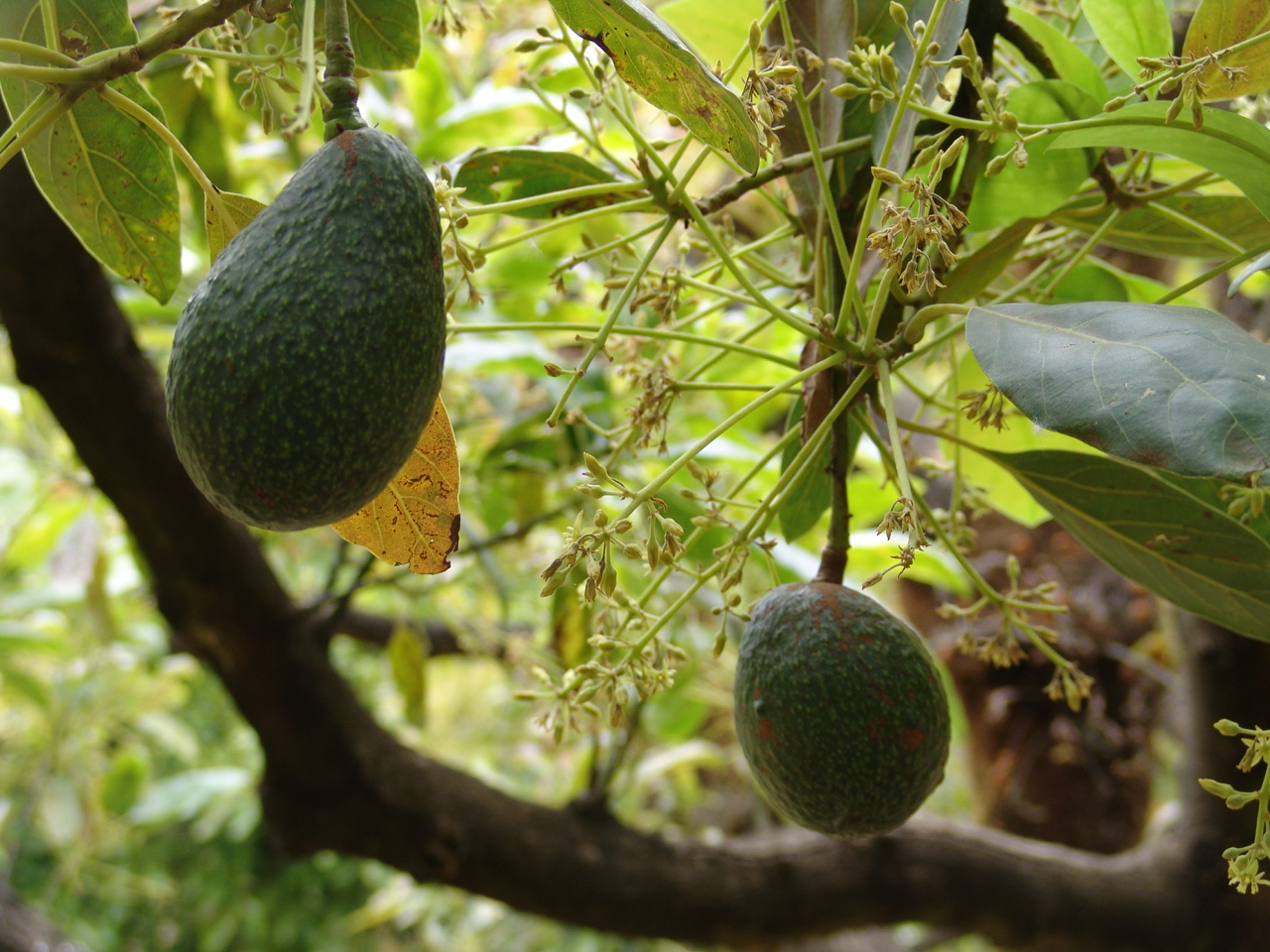
Virtual Avocado Festival at SCREC

Want to know more about avocados and their history in Southern California? Of course you do! So check out the UC South Coast Research & Extension Center's virtual Avocado Festival, June 22 -27, 2020. For information about the week's festivities, contests, and giveaways, visit http://ceorange.ucanr.edu/avocadofestival/

Of particular interest to me us a presentation by Homestead Museum Director Paul Spitzzeri entitled "The Hanging Gardens of Babylon in Southern California: Edwin G. Hart and the Avocado Tracts of Hacienda Heights and La Habra Heights, 1910-1930," which will be presented online on Wednesday, June 10th from 2:00 pm to 3:00 pm.

As greater Los Angeles experienced waves of growth and development booms in the first few decades of 1900s, a figure, little known today, played a pivotal role in developing the “avocado subdivision.”  Edwin G. Hart, a real estate developer and avocado pioneer and promoter, created the communities of North Whittier Heights, renamed Hacienda Heights in the early 1960s, and La Habra Heights, with avocado growing as a major element of both.  Paul R. Spitzzeri, director of the Workman and Temple Family Homestead Museum in the City of Industry, will give a PowerPoint-illustrated presentation on Hart and these subdivisions during a twenty-year period when the avocado began to become a household name in the region.

Paul has worked at the Homestead Museum since 1988. He has a B. A. and M. A. in History from California State University, Fullerton and has written on California history for such journals as California History, Southern California Quarterly, California Legal History and Journal of the West, and in the anthologies Law in the Western United States, Encyclopedia of Immigration and Migration in the American West, and Icons of the American West. His biography on the Workman and Temple families is an Award of Merit winner from the American Association for State and Local History.

Please register at: http://ucanr.edu/survey/survey.cfm?surveynumber=30245

Friday, May 22, 2020

Head hunting

Henry William Head
For some strange reason, I've been contacted in the last week by three separate people from three separate places who are all researching the pioneer Head family of the Santa Ana/Garden Grove area. It seems that at least some of the interest is driven by 1896 state senate candidate Henry William (H.W.) Head's early involvement in the Ku Klux Klan rather than anything else the family may have accomplished after establishing themselves in Orange County. Sadly, H.W. Head's Klan membership in the years after the Civil War isn't much of a surprise, considering he was an old Confederate and of course a Democrat.

Head and some of his fellow Confederate vets were indeed among the rather broad coalition of many citizens (including Republicans and Democrats, Northerners and Southerners) who worked together over many years to win Orange County's independence from Los Angeles.

His son, Horace Caldwell (H. C.) Head, became one of Orange County's leading lawyers and served for a time as District Attorney. There's more than a little information about the family to be found. And for whatever reason, the Heads are suddenly a hot topic.

Before even more people ask, I figure I'll just post some of my advice on tracking down the Heads right here on my blog. But first, here's what H. C. wrote about his father in Dr. C.D. Ball's Orange County Medical History in 1926:

"HEAD, HENRY WILLIAM, was one of the pioneer physicians of the territory that is now known as Orange County. He was born in Obion County, Tennessee, on the first day of January, 1840. His father was a country doctor of the old school, his grandfather was a pioneer of the new territory of Tennessee, and his great-grandfather was a Virginian and a lieutenant in Washington's army of patriots during the War of Revolution.

"Dr. Head had just finished his academic training and had started to study law when the Civil War interrupted his studies. He at once enlisted and served four years in the Confederate Army, and was captain of his company at the end of the war. When he returned to his home his father asked him when he was going to resume his study of law. His reply was that for four years he had seen so much of human misery and suffering that he had determined to study medicine and do what he could to alleviate the ills of humanity. Accordingly, he entered Nashville Medical College, then one of the leading medical schools of the country, and which afterwards became and now is the medical department of Vanderbilt University at Nashville. He was graduated in 1868 and at once commenced the practice of medicine in his native county of Obion in Tennessee. There he was married and two of his children were born. His practice was extensive and laborious and the climate severe and unhealthful, so that in a few years his health was impaired, and in 1876, he moved with his wife and two children to California, locating on a farm about four miles northwest of Santa Ana. It was his intention to retire from practice and follow farming, but at that time there were very few doctors in the country and he could not ignore the call of affliction. His credentials were presented and he was duly licensed to practice his profession in this State (Certificate 478). For a number of years his chief occupation was the practice of medicine, with farming and activity in political and public affairs as side lines. There are grandparents now living in Orange County whose advent into this world was assisted by Dr. Head. There were no hospitals here in those early days, and like all the pioneer practitioners he had to be a combination of doctor, surgeon, oculist and dentist.

"Dr. Head retired from practice a number of years ago, and moved to Santa Ana, where he spent the last years of his life busy in peaceful contentment. He was blessed with a family of seven children and a number of grandchildren. On December 5, 1919, he passed to his reward. He was laid to rest in the old Santa Ana cemetery, beside the grave of his father, Dr. Horace Head, who was known to the early settlers as "the old Doctor," though he did not engage in practice after coming to California. 

"Dr. Head was a Democrat -- served one term (the 26th Session) in the State Assembly."

Anyway, what follows are some additional suggestions on where to look for more information about the Heads. Writing about them isn't in my top ten "things to do," but it seems to be so for other folks. And even if you don't give two hoots about the Heads, you may spot a few general resources that may be useful in your own projects. Here's a small smattering of potential resources for Head hunters,...

1)     Check the “mug books” for the area, including the two Orange County history volumes by Samuel Armor (1911 and 1921) and J. M. Guinn (1901), and the three-volume set by Adalina Pleasants.

2)      H. C. Head wrote a little pamphlet in 1939 entitled “The History of Garden Grove.” I’m not sure if it includes any info you’re looking for, but I believe they have copies at for sale at the Garden Grove Historical Society.

3)      Which brings me to my next point,… the Garden Grove Historical Society. The Head family was fairly significant to the town’s early history, so they may have something in their impressive archives.

4)      Local historian Dr. Leroy Doig also wrote a trilogy of books about the history of Garden Grove that may be working taking a look at. I’m not sure how/if he deals with the Head family.

5)      Horace Caldwell Head also wrote a 1942 booklet, About Some of the Heads. It seems the Orange County Historical Society has a copy (although it will be a while before those records are accessible again), as does the Sherman Library and the History Room at the Santa Ana Public Library.

6)      Writer Gustavo Arellano points out that a 1916 pamphlet entitled The Ku Klux Klan is also available to researchers in the Santa Ana History Room. In it, the pamphlet's author, Annie Cooper Burton, wrote, “...I have been most fortunate in having Captain H. W. Head . . . now a popular physician of Santa Ana, California, a former Grand Cyclops of one of the Nashville dens, to draw upon for material.” The pamphlet includes information about the Klan from Head ad a photo of him in his robes.

7)      Of course, the contemporary newspapers are usually one of the best resources. The Los Angeles Times is available on Newspapers.com from their first issue on, and covers a good deal of Orange County-area news. Newspapers.com also features the Santa Ana Register from 1906 through the beginning of WWII which might yield something. For earlier Orange County papers, I suggest the Santa Ana Evening Blade, which is available on microfilm at the Santa Ana Public Library. Many of the early Anaheim papers are also available at the Anaheim Heritage Center and shed light on some very early local history. Some of the early Anaheim papers are also digitized by an amazing volunteer at YoreAnaheim.com. It'd also be worth checking Chronicling America and NewspaperArchive.com.

8)     Historian Stephanie George rightly suggests contacting the Sherman Library, which "just accepted a huge personal research collection from our friend, the late Phil Brigandi, who may have kept a file on Head. Although the collection isn't processed yet, Phil kept immaculate files and Paul may be able to see what Phil may have kept, if anything. And, who knows, maybe the Sherman has something."

9)      Steph, who's also an amazing genealogist, additionally suggested checking the files at the Orange County California Genealogical Society's library in Huntington Beach.

10)     Also check in with the Civil War Roundtable of Orange County and see what they have in their files.

If you have more suggestions, dear readers, feel free to post them in the comments below.